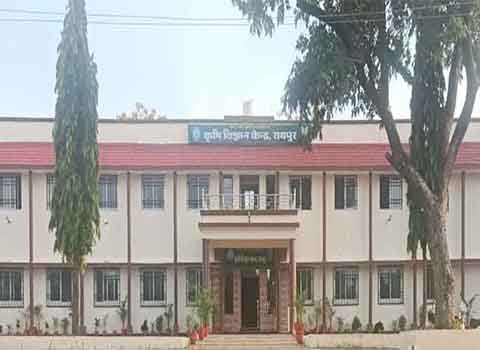
MISSION of KVKs
To transfer proven agricultural technologies to farmers through trainings, demonstrations, and on-farm trials.
To develop need-based, location-specific solutions for crops, livestock, fisheries, and natural resource management.
To strengthen farmer skills, entrepreneurship, and capacity building, especially among rural youth and women.
To promote climate-smart, sustainable, and resource-efficient agricultural practices.
To support diversification, value addition, and income-generating activities in farming systems.
To provide timely technical advisory services for solving field-level problems.
To act as a knowledge and resource centre connecting farmers with research institutions and development agencies.
VISION of KVKs
To build a farmer-centric system that strengthens sustainable agricultural growth through science-based innovation.
To ensure farmers, rural youth, and agri-entrepreneurs receive timely, practical, and locally relevant knowledge.
To integrate modern technologies with traditional practices for long-term productivity and environmental health.
To enhance farmers’ capacity for informed decision-making and efficient resource management.
To improve climate resilience by promoting practices that help farmers adapt to changing weather conditions.
To support the adoption of improved crop varieties, advanced production techniques, and sustainable approaches.
To make agriculture more profitable, technology-enabled, and skill-driven for better rural livelihoods.
To function as an effective link between research institutions and the farming community, ensuring that innovations reach the field in a usable and impactful form.
MANDATESof KVKs
To conduct On-Farm Testing (OFT) for identifying location-specific technologies for various farming systems.
To organize Frontline Demonstrations (FLDs) to showcase proven technologies and improve their adoption.
To provide need-based training to farmers, farm women, rural youth, and extension personnel.
To serve as a knowledge and resource centre for agricultural technologies and skill development.
To produce and make available quality technological inputs such as seed, planting material, and livestock strains.
To offer timely advisory services for addressing field-level agricultural problems.
To collaborate with research institutions, line departments, and agencies for effective technology dissemination.
ACTIVITY of KVKs
To organize skill-oriented training programs for farmers, farm women, rural youth, and extension workers.
Provide need-based technical advisory services through visits, phone calls, WhatsApp, and digital platforms.
Implementation of Frontline Demonstrations (FLDs) on local area based crops, livestock, and allied sectors to showcase effective technologies.
Conduct On-Farm Testing (OFT) to evaluate and refine technologies under local conditions.
Produce and supply quality seed, planting material, and other technological inputs.
Conduct field days, kisan melas, exhibitions, and awareness campaigns.
Establish and maintain demonstration units such as nurseries, nutrition gardens, livestock units, and protected cultivation structures.
Facilitate capacity building and entrepreneurship development in agriculture and allied sectors.
Document success stories, case studies, and best practices for wider dissemination.
Network with research institutions, state departments, and development agencies for coordinated extension activities.