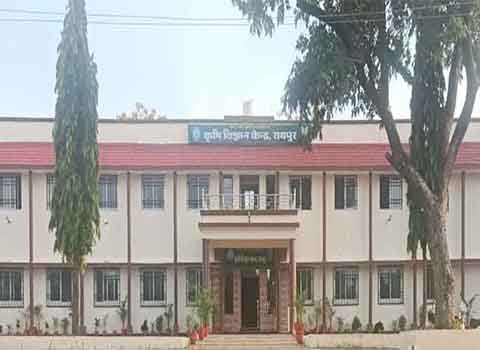
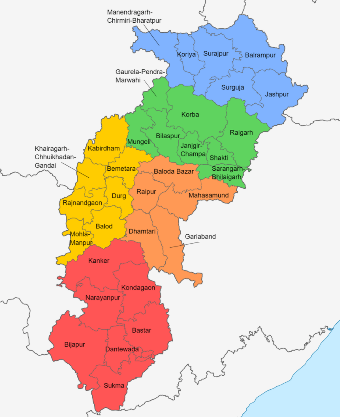
Chhattisgarh was formed in the year 2000 and is located in east-central India. The state lies in the Chhattisgarh Plain, which is the fertile upper basin of the Mahanadi River. Its capital is Raipur, with Naya Raipur (Atal Nagar) being developed as a modern smart city. Covering an area of approximately 135,192 square kilometers, with 33 districts, it is the 9th largest state in India and home to around 25.54 million people. The state is known as the “Rice Bowl of India” due to large-scale paddy cultivation. It has rich forest cover, mineral resources, and biodiversity. 80% of the population depends on agriculture & allied sectors; dominated by small and marginal farmers. The state has a strong presence of tribal communities with rich cultural heritage.
Chhattisgarh Agriculture Scienerio Considered as "The Rice Bowl of Central India" Chhattisgarh's economy is predominantly agrarian, with about 80% of its population dependent on agriculture and allied sectors. The state is endowed with fertile soil, ample water resources (like the Mahanadi basin), and a suitable climate, making it a key producer of paddy rice.Paddy (Rice) main dominant crop occupies over 77% of the gross cropped area during the Kharif season.Home to over 20,000 indigenous rice varieties, offering a huge potential for organic and niche marketing (e.g., Chhattisgarh's Organic & Indigenous Rice is gaining national fame).Major cropping seasons are Kharif and Rabi.Other Kharif crops include maize, soybean, groundnut, and pulses (like Arhar/Tur). Rabi crops include wheat, chickpea (gram), lentils (masoor), and vegetables.Low irrigation coverage (~28-35% of land), making farming highly rain-fed and monsoon-dependent.Govt. Focuses on Crop diversification (from paddy to maize, pulses, millets), micro-irrigation, and promotion of organic farming of native rice varieties.
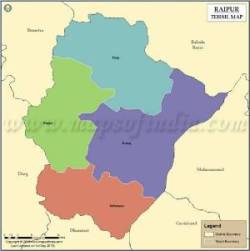
Raipur district is an important administrative, economic, and agricultural district of Chhattisgarh state. Raipur city serves as the state capital and is a major center for governance, trade, education, and industry. The district has good road and rail connectivity, linking it with major cities of India and supporting rapid urban and rural development.Total Geograhical Area of area is 2,891.98 sq km and population and 2160876 [Rural- 884224 Urban- 1276652]. Number ofb tehsil in raipur districts are 8 and number of blocks are 4 covers 545 villages.
Raipur Agriculture Scienerio Agriculture is one of the main occupations in Raipur district. Paddy is the dominant crop during the kharif season, while wheat, gram, mustard, and vegetables are grown in the rabi season. The district has fertile plains with irrigation facilities from canals, tube wells, ponds, and tanks. Farmers are also engaged in dairy, fisheries, and allied agricultural activities.Raipur district experiences a tropical climate with hot summers, moderate winters, and monsoon rainfall suitable for crop production .